
My take on military history, current defence issues, politics and my books – not necessarily in that order…
SDR25 and the British Army…
26 October, 2024. Keir Starmer’s Strategic Defence Review (SDR) is unlikely to result in a significantly larger army.
And yet, while our senior military leaders tell us we are living in “extraordinarily dangerous times”, with growing threats from Russia, China and Iran, the UK’s interests at home and abroad are currently defended by the smallest army since the decades following the end of the Napoleonic Wars – 81,000 in 1819 versus fewer than 72,000 today.
The force is so small, and under-recruited, that the influential House of Lords International Relations and Defence Committee warned recently that it might not be able to make its expected contribution to collective defence as part of NATO.
A former CDS, General Sir Nick Carter, believes the army “has fallen below critical mass”, while academic, Dr Marc DeVore (University of St Andrews), argues that it is “too small and inadequately set up for large, prolonged conflicts like the one in Ukraine”.
Even the Defence Secretary, John Healey, has admitted that the military is “not ready to fight” (Daily Telegraph, 25 October, 2024, p1).
That is a very worrying state of affairs.
The obvious answer is for Labour to commit to expanding the Army so that it can take its rightful place alongside our NATO allies, providing an effective antidote against the threats posed by the likes of Putin, the Chinese Communist Party, or Iran’s Ayatollahs. Read more…
Labour to build on the Green Belt
12 December 2024. Clement Atlee’s post-war Labour government introduced the Green Belt as a national policy in the Town and Country Planning Act of 1947.
Now his successor, Keir Starmer, and Deputy Prime Minister, Angela Rayner, are going to build on it.
The Green Belt was created as a buffer – between towns and the countryside – and as a planning tool to prevent urban sprawl by restricting development to built-up areas.
Read more here: Politics
Playing peace poker with Putin
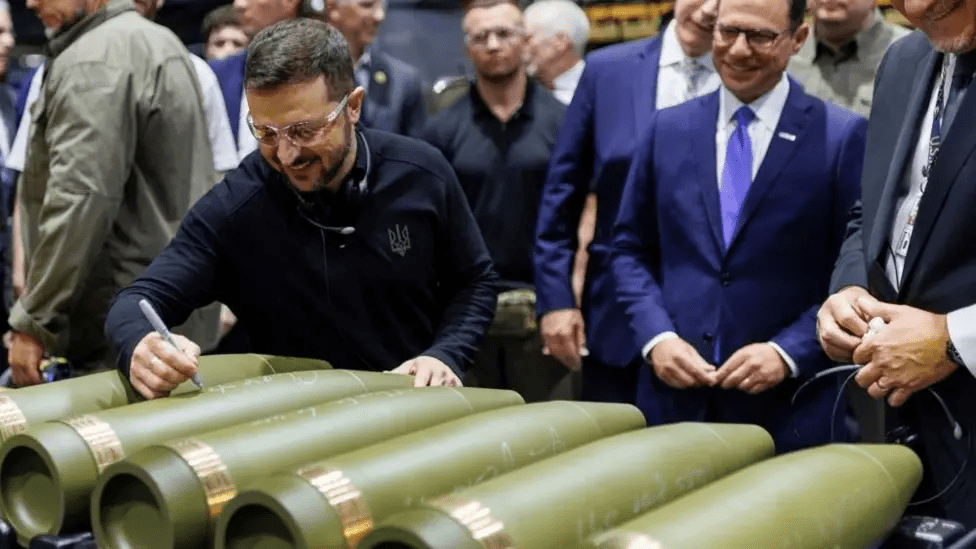
As a retired senior military officer pointed out recently, the unrestricted use of the UK’s Storm Shadow long-range missiles will not turn the tide of war in favour of President Zelensky and Ukraine. Ukraine’s ability to use Storm Shadow to prosecute depth targets, is partly symbolic, signifying continuing western support, but also a military necessity that sits at the heart of Zelensky’s plan to settle the conflict on his terms – to deliver a peace deal that he and his nation can live with.
He needs Storm Shadow to demonstrate that the west is still in his corner and prepared to risk Putin’s ire in order to provide support. He also needs it to demonstrate to Russian people who may think they are safe, well behind the fighting front, that he has the means to give them a taste of what Ukrainians have been living with for over two years.
Of course, any agreement on the use of the missiles is bound to include a clause that prevents them from being used to directly target civilians. However, by taking out military targets well inside Russian territory, in places the local inhabitants thought were relatively safe, he could ramp up public disquiet about how the Kremlin is prosecuting the conflict. Read more…
 As I See It...